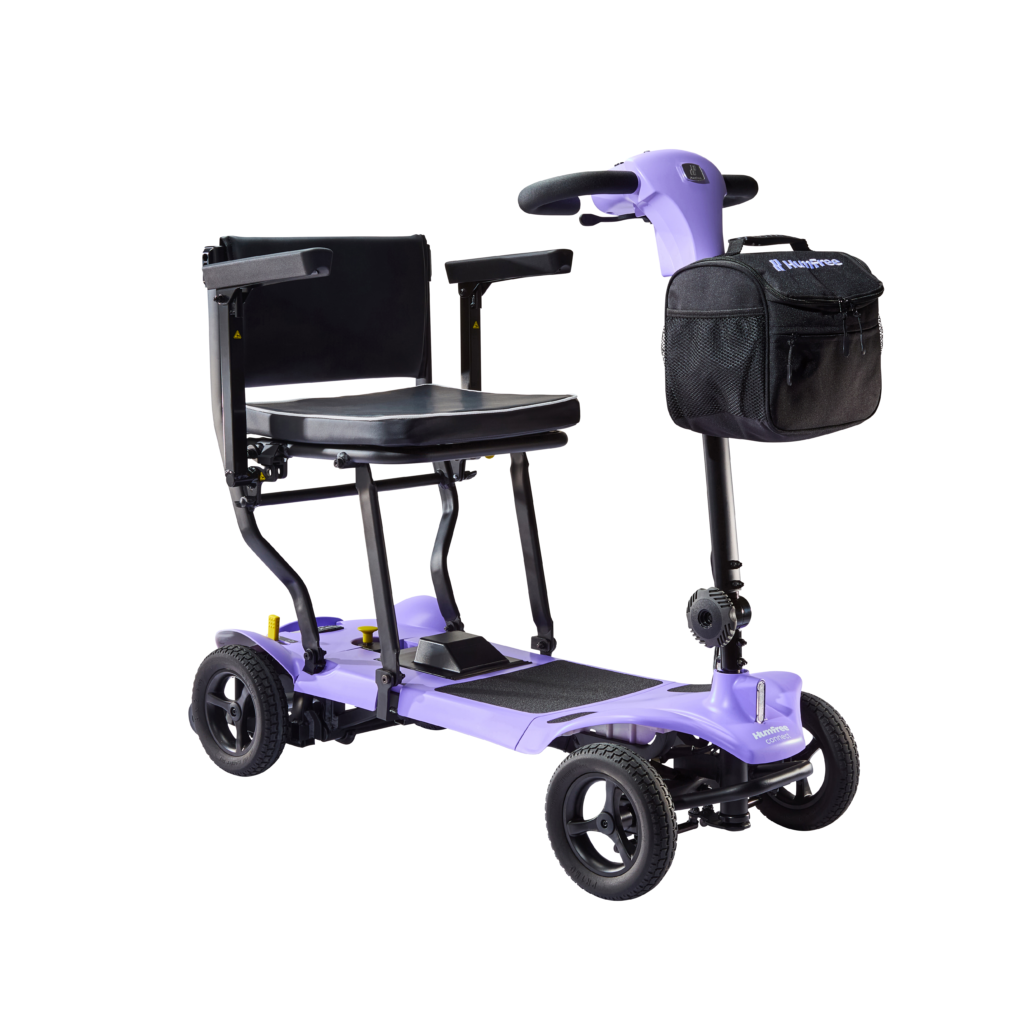
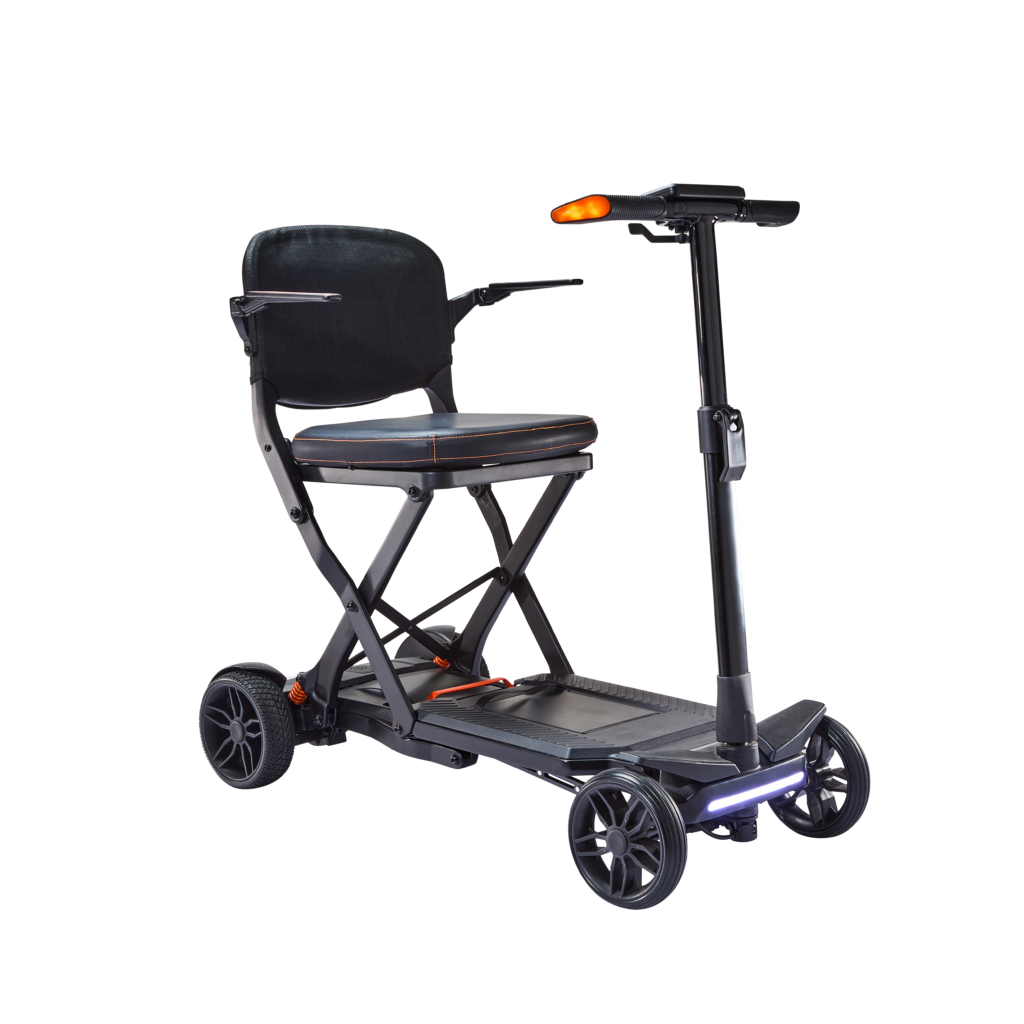
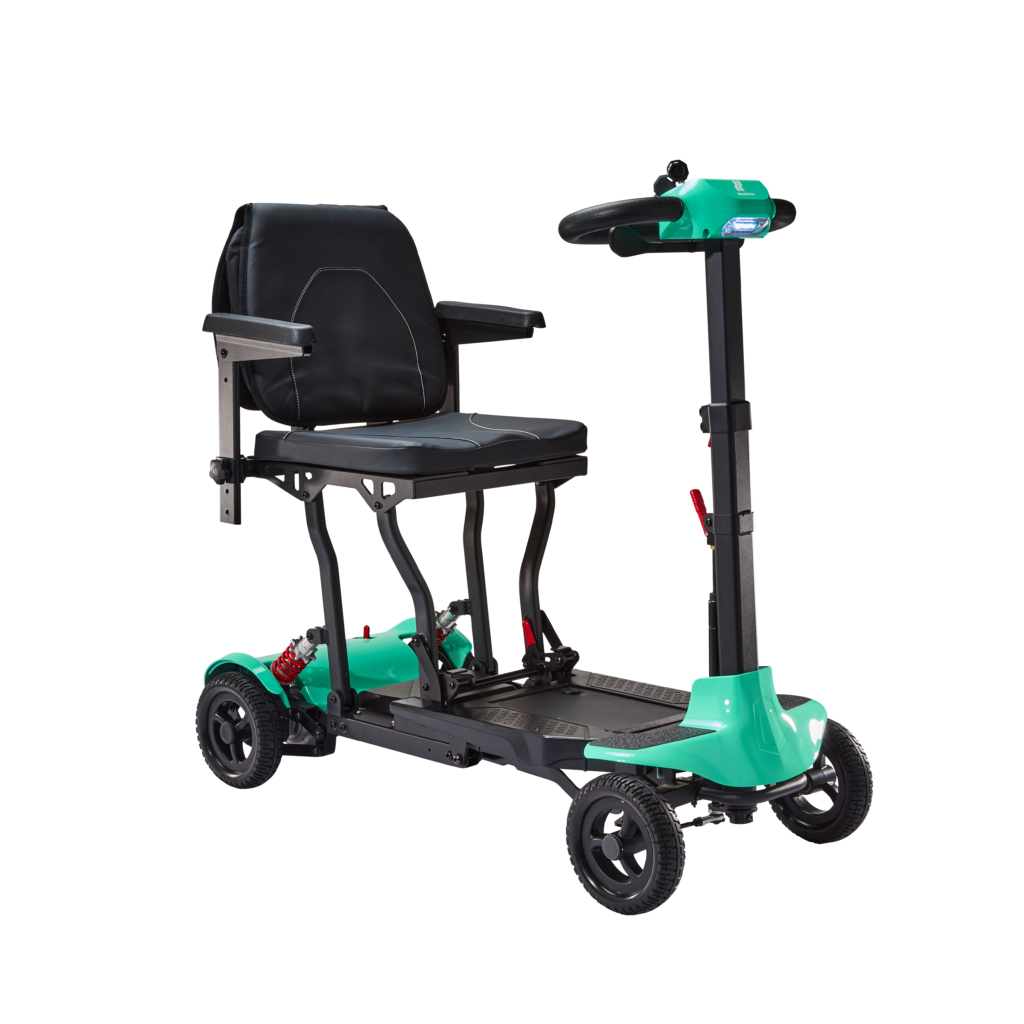
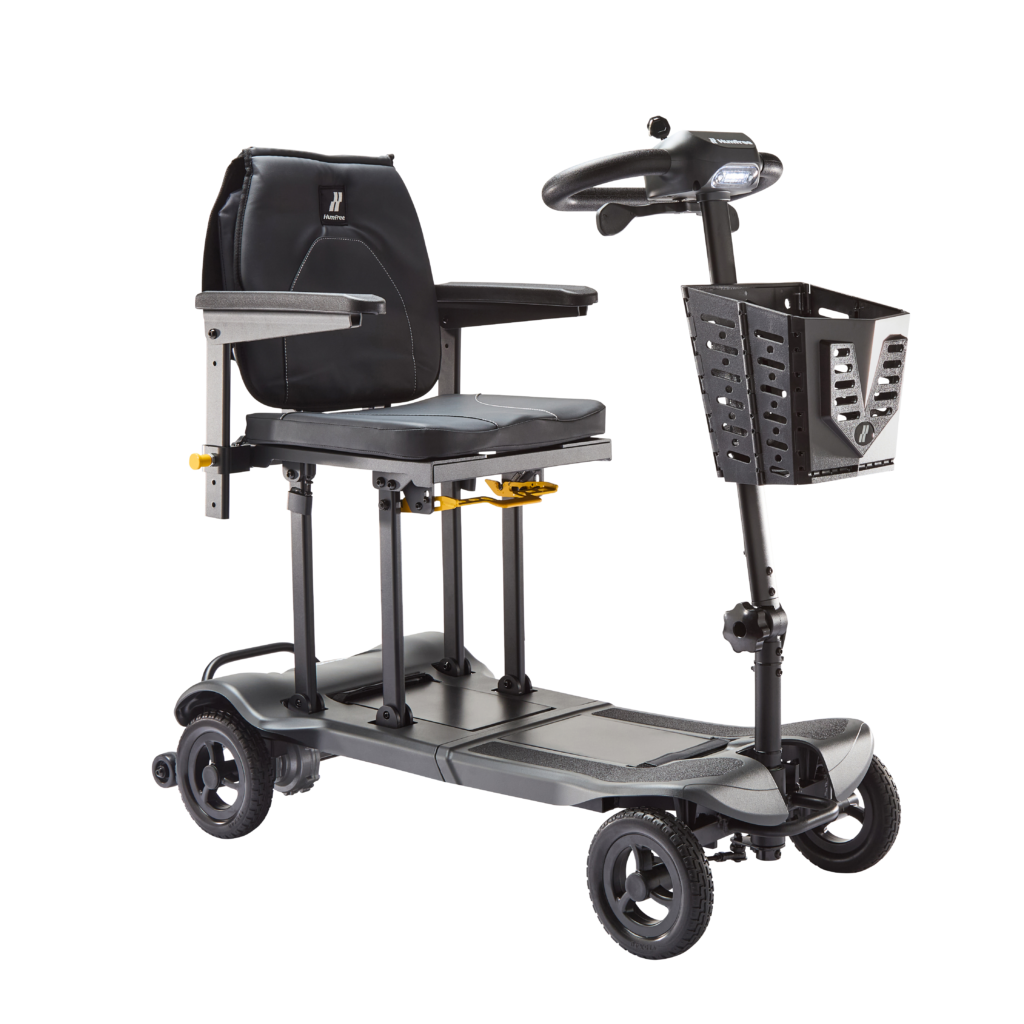
Ready to get going? Hold on just a second…
Whether you’re new to mobility scooters or fancy brushing up on the basics, knowing how to ride safely can make a world of difference to your next adventure.
At Humfree, we want you to feel confident before setting off, so you can get the most out of your scooter.
From understanding the Highway Code to navigating tricky weather conditions, we’ve pulled together a helpful guide to driving your mobility scooter safely and comfortably.
Key takeaways:
- Safety and confidence are key when starting out with a mobility scooter.
- Weather and visibility affect how and when to use your scooter.
- Insurance isn’t required for Class 2 or Class 3 scooters, but it can give you peace of mind.
Basic controls
If you’ve never ridden a mobility scooter before, or haven’t used one for a while, it can seem overwhelming to get out there and ‘go’. But once you get to grips with the basic controls, you’ll realise there’s nothing to it.
We’ve broken down some of these below:
Ignition
Most scooters start by putting the key into the ignition. For people with limited dexterity, this can be a little fiddly.
Many of our scooters feature keyless technology, making it easier to get going.
Wigwag
Never heard of it? You’re not alone.
Simply put, it’s the lever attached to the scooter’s tiller.
Pushing one side of the lever propels the scooter forwards, while moving it in the opposite direction reverses it.
Speed dial
To control the speed, just turn the main dial.
On ours, a tortoise represents the slowest speed, while a hare represents the fastest.
Brakes
Usually found in modern scooters, including ours, is electromagnetic braking, which automatically slows the scooter when you release the throttle controller.
This means you don’t need to push a separate brake pedal or squeeze a lever to brake.
The power cuts off when the throttle is released, letting your scooter stop easily.
General safety rules for mobility scooters
1. Get to grips with the controls before attempting to drive on trickier surfaces.
2. Turn slowly on your scooter to avoid toppling over.
3. You don’t need to start at 4mph straight away. 2mph is more than enough to feel the wind in your hair.
4. Be aware of the people around you. As you’re lower to the ground than most pedestrians, people may not always see you coming.
Before you set off
From adjusting your seat to having the tiller at the right height, it’s always worth taking an extra moment to double-check everything is ready to go.
And it’s even more important to ensure your scooter has enough battery for your journey – you don’t want to get stuck halfway through!
Click here for our top tips for keeping your scooter in optimal, charged condition.
Eyesight requirements
Glasses at the ready… It sounds extreme, but you can actually be prosecuted if you are caught driving with poor eyesight.
GOV.UK says you should be able to read a car’s registration number from a distance of 12.3m/40ft. If you aren’t sure, it’s best to speak with your optician.
The Highway Code
Did you know mobility scooter users must follow the Highway Code? We’ve broken down some of the rules below, but head to GOV.UK for more information.
Pavement rules
- The maximum speed is strictly 4mph on pavements or in pedestrian areas.
- You must slow down in narrow spaces or around pedestrians who cannot move quickly.
- Class 2 users should always use pavements whenever available.
Road rules
- Only Class 3 mobility scooters are allowed on public roads.
- Class 3 mobility scooters can travel up to 8mph on the road.
- Class 3 road users must travel in the direction of traffic.
- Front and rear lights, reflectors, direction indicators, and an audible horn are required by law for Class 3 scooters.
- All mobility scooters are prohibited from using motorways, bus lanes and cycle lanes.
Pedestrian etiquette
When you’re out and about, it’s important to remember that pedestrians have priority.
Here are some more things to keep in mind:
Speed
Keep your maximum speed at or below 4mph (6 km/h), dropping even lower around groups or children. You’ll find that 2mph is often enough to get you where you want to go.
Space
Stay to the left of the path when possible, leaving enough room for foot traffic to pass safely. If this isn’t possible and you’re riding on the same path, make sure you’re a reasonable distance behind pedestrians.
Parking
Never leave your scooter unattended on a pavement or path where it blocks other pedestrians, pushchairs, or wheelchair users.
Top tip: Remember to secure it with a sturdy lock if unattended.
Driving in different conditions
Rain
Riding your scooter in light rain isn’t usually an issue – just make sure to wipe it down afterwards – but if it’s chucking it down, consider whether you really need to use it.
Snow
Driving a mobility scooter in the snow is risky. Even if it stops, wet slush can get into the wheels and damage electrical parts.
Extreme heat
Summer keeps getting hotter. So, it’s important to look after your scooter and yourself. Heat can drain the battery, so take breaks if you’re using it in high temperatures.
Remember to take your personal safety into account, too. Pop a water bottle in your scooter’s front basket to keep cool while you’re out and about.
Night-time safety
If you plan to ride around at night, it’s a good idea to look into reflective gear.
But there’s no need to break the bank. A standard high-vis vest and clip-on LED lights should be enough to keep you visible and safe at night.
Insurance and protecting your mobility scooter
Do you need insurance for a mobility scooter? The short answer is no. But it’s worth looking into. Accidents are part of life, and knowing you’re protected can make you feel more confident getting out and about.
Let’s get you going, safely…
At Humfree, we’re here with you every step of the way. Even before you get going.
During your free home test drive, one of our friendly mobility experts takes the time to understand your needs and answer any questions – nothing is too big or too small here.
They’ll also explain the benefits of each model, demo how to use it, and show how everything works, so you can feel confident from the very first ride.
FAQs about driving a mobility scooter
Let’s address some of the most common questions.