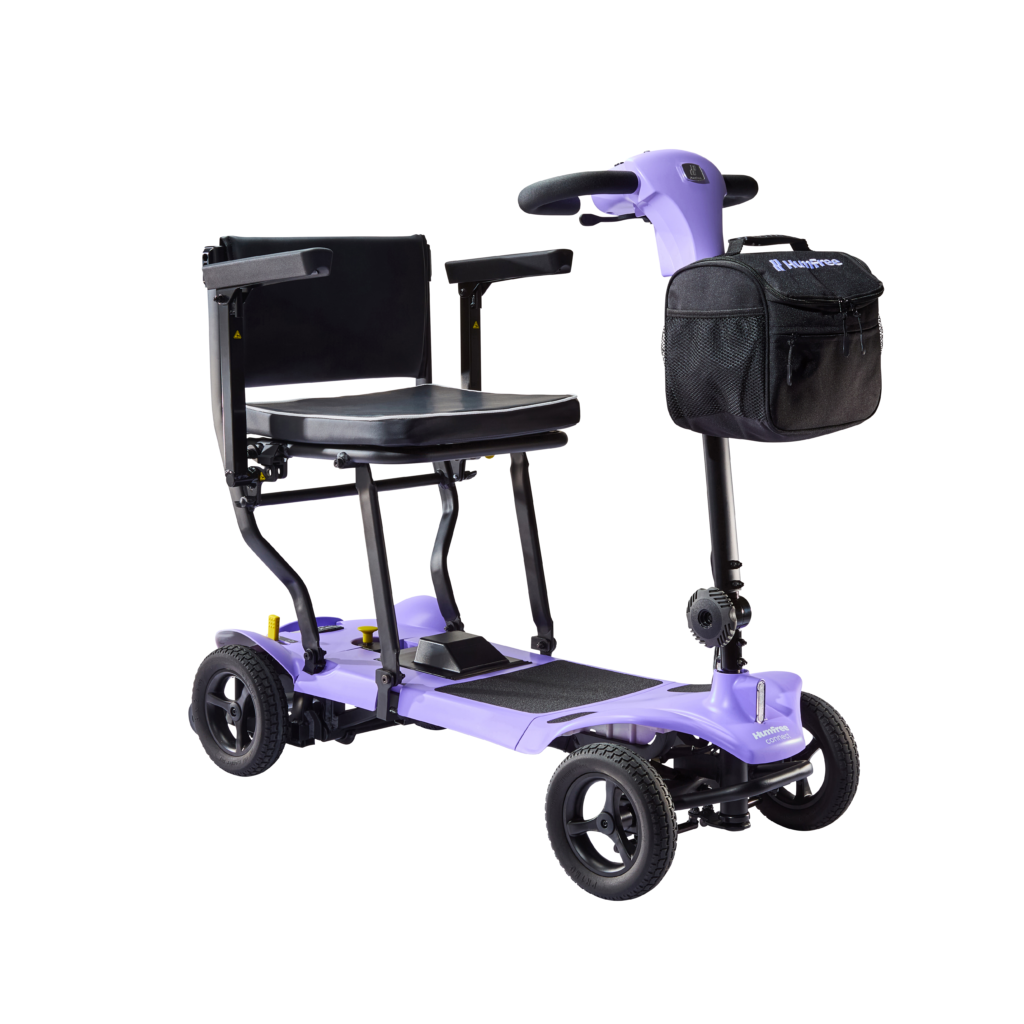
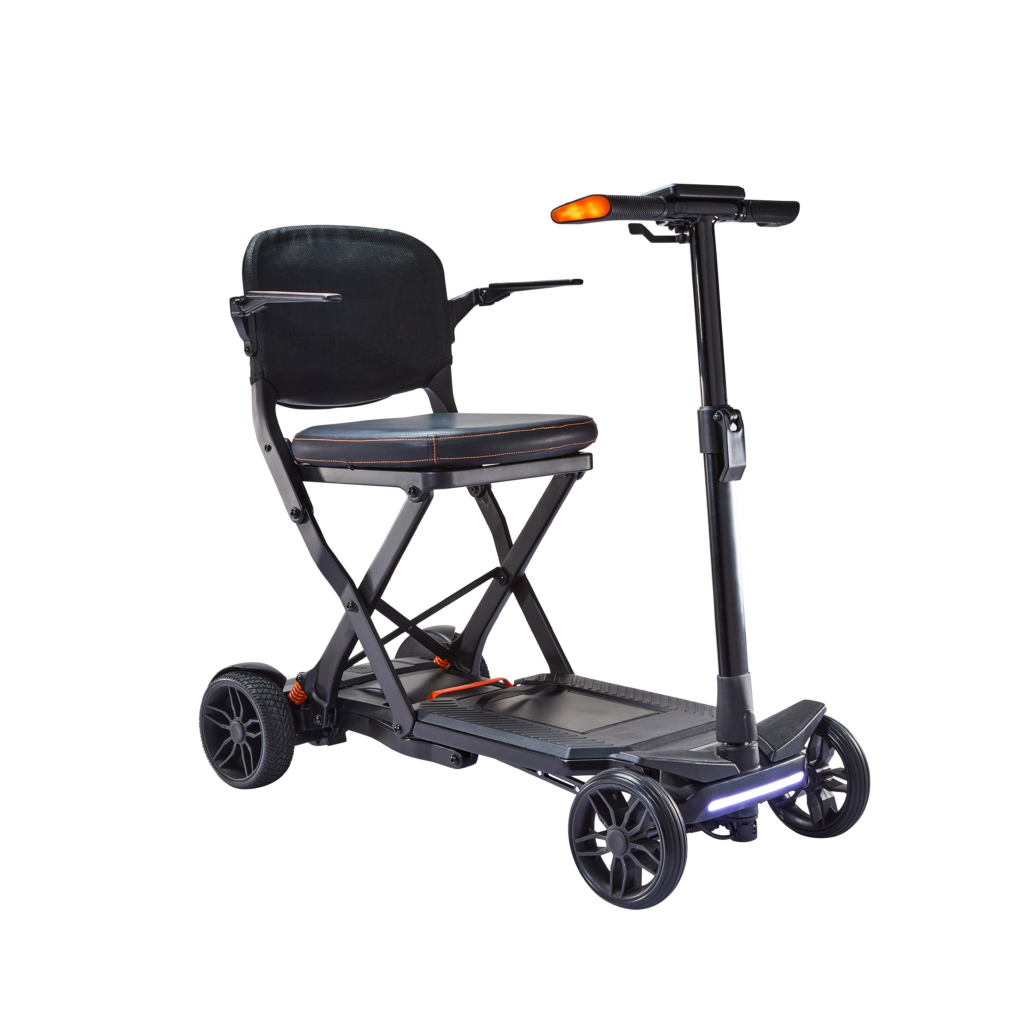
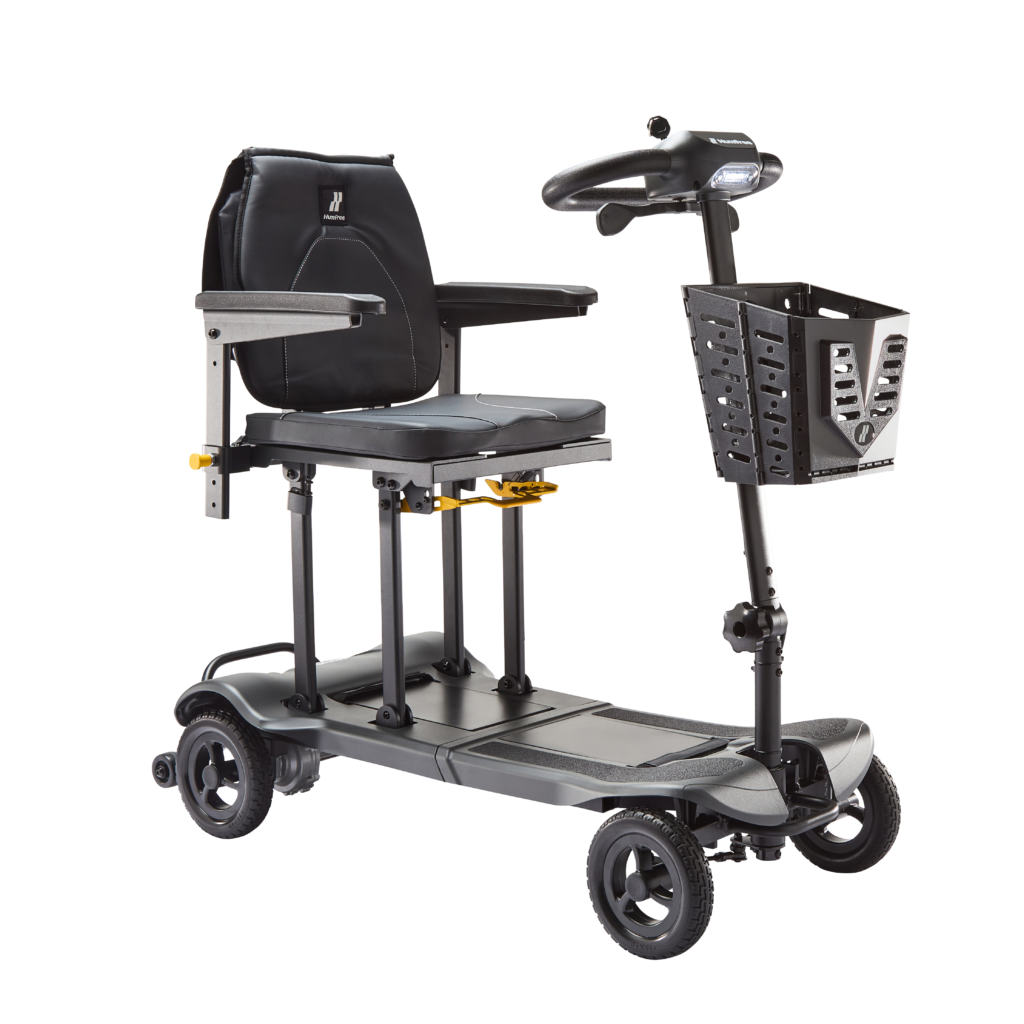
We know buying a scooter is a big purchase. Like any investment, it’s worth taking the time to think it through and decide if it’s the right choice for you.
We’re here to help you know exactly what to look out for (ten things to be precise), so you get the most for your money. And, importantly, get the most out of your scooter.
Key takeaways:
- There are two main mobility scooter types, Class 2 for pavement use and Class 3 for road use. The right ‘Class’ depends on your lifestyle.
- Technical specifications, such as battery life, speed and driving range, are factors to consider before buying a mobility scooter.
- Trying before you buy can help you decide whether it’s a good fit.
- After-sales care and warranty can give you peace of mind after purchasing.
1. Scooter class
Did you know there are two main types of mobility scooters? Discover the differences below and see which one is right for you.
Class 2
Class 2 mobility scooters are designed for use on pavements, pedestrianised areas, and when crossing roads. They have a maximum speed of 4 mph or less.
Many lightweight mobility scooters, including ours, fall into this category.
Class 3
Class 3 mobility scooters can do everything a Class 2 can – but they can also drive on roads.
For most people, a Class 2 mobility scooter is enough to get around. If you want to go a little further (up to 8 mph on the road, in fact), a Class 3 mobility scooter might be a worthwhile option.
Unclassified
Technically, there’s a third type of mobility scooter… The unclassified kind.
An ‘unclassified’ scooter is a little trickier to own, as it requires a driver’s licence and must be taxed.
Most people stick to a Class 2 or Class 3 model to make life easier.
2. Driving range
Before buying a mobility scooter, it’s best to have a think about where you’ll be going – and for how long.
Statistics show the average trip to the local shop takes 22-44 minutes on foot, which roughly translates to 1-2 miles at 3 mph. The average trip to the retail park or town centre is slightly longer, clocking in at 73-98 minutes and around 5-6 miles at 3 mph.
Most of our scooters go up to 9 miles, while the Humfree Five goes up to an impressive 11.5 miles. This means you can shop to your heart’s content.
3. Battery life
If you’re planning to travel a little further, having a decent battery life becomes even more important.
Most modern scooters use lithium-ion batteries. These typically last between 2 and 5 years, and sometimes even longer. However, frequent use can gradually reduce your battery’s performance and charging ability.
Luckily, we’ve put together a handy guide to help preserve your battery life, so the fun doesn’t have to stop.
4. The number of wheels
Three-wheeled and four-wheeled scooters perform pretty similarly indoors. But when it comes to riding outside, a scooter with four wheels is the unanimous winner.
Thanks to their wider, more stable base, four-wheeled scooters won’t let unexpected bumps or kerbs get in the way of a good time.
Still undecided? Check out the differences between a three-wheeled vs four-wheel mobility scooter here.
5. Weight capacity
It may seem like a small thing to consider, but exceeding the weight limit can really damage your mobility scooter. Consider the load of your shopping too – it can add more weight than you think.
See how our scooters measure up below:
| Model | Weight in stone | Weight in kg |
| Humfree Connect | 19 st | 125 kg |
| Humfree Carbon | 19 st | 125 kg |
| Humfree Lite | 19 st | 125 kg |
| Humfree Fold | 19 st | 125 kg |
| Humfree Five | 18 st 9 lb | 120 kg |
For users over 120 kg, we’d recommend looking for a robust heavy-duty or bariatric model. These are made with a higher weight in mind and feature a sturdier frame, wider seating, and reinforced materials.
6. Transportation
A common misconception about mobility scooters is that they’re bulky and difficult to transport. But this isn’t always the case.
Nowadays, many scooters are designed to be folded away or taken apart in seconds, making them much easier to lift into a car boot or store at home. So, whether you’re popping to the shops or heading on a last-minute getaway, they make travelling as simple as it should be.
7. Speed
Class 2 mobility scooters (like ours) go up to 4 mph, which is close to the average walking speed of around 3 mph for most adults. For those over 70, this drops to 2 mph. This means riding at 3-4 mph can almost halve your journey time compared with walking, giving you more time for what really matters.
While they can go up to 8 mph on the road, Class 3 mobility scooters also have a maximum pavement speed of 4 mph.
8. Comfort
Imagine this: You’ve been sitting on your scooter for hours. You’re starting to feel some discomfort. You don’t feel like travelling any further. You’re even thinking it might have just been easier to walk…
This doesn’t have to be a reality. Many mobility scooters come with cushioned seats designed to support and keep you comfortable for as long as you need.
Case in point, our Humfree Fold. Featuring a plush, padded seat and supportive armrests, it’ll make every outing extra-comfy while reducing strain when steering.
9. Test drive
When you buy a car, it’s expected to test it out first. Why should it be any different for your mobility scooter?
Mobility scooters are an investment, and a test drive can show you if they’re really worth it.
A test drive lets you experience how it feels to ride, whether you can lift and transport it easily, and if it’s the right choice for your lifestyle and needs.
Going to a showroom can seem intimidating, and, for those with mobility needs, downright difficult. That’s why at Humfree, we bring the test drive to the comfort of your home.
Find out what’s included in our home test drive here.
10. Warranty & after-sales support
Wait a moment before you buy! Have you double-checked the warranty and after-sales support?
Unexpected problems are part of life. That’s why it’s important to know you’ll be sorted if any trouble comes your way.
Luckily, we’re always a call away. Our Bristol-based customer service team is on hand to answer any questions – from servicing and repairs to general “How do I…?” moments. So, you can stay confident you made the right decision, ride after ride.