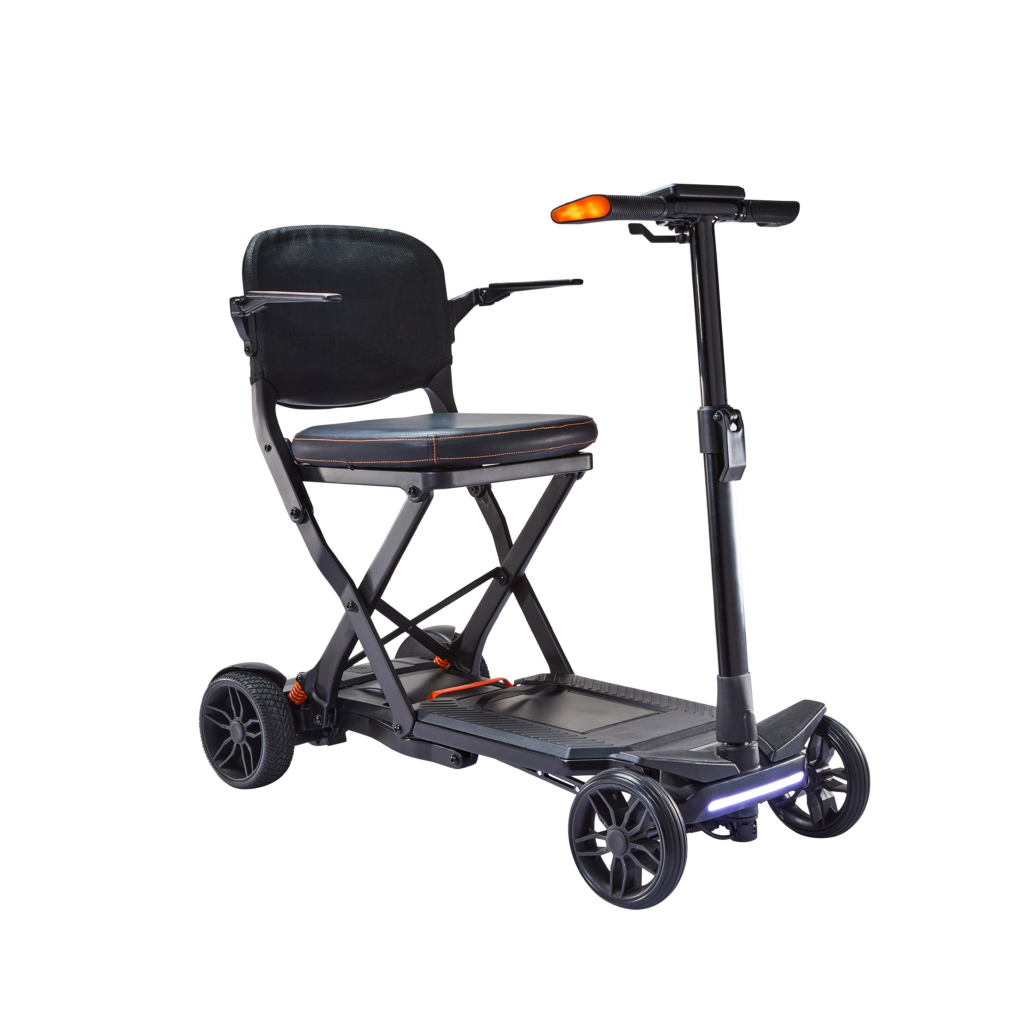
You’re excited about the trip. You’ve packed your bag. You’ve double-checked the booking. And then you look at your scooter and think, “Right. How complicated are you going to make this?”
The good news? Lighter, more compact travel mobility scooters mean it’s absolutely doable. It just takes a bit of planning and a small shift in mindset. And once you’ve got one trip under your belt, the second one feels far less dramatic.
Can you travel with a mobility scooter?
Yes. With a travel mobility scooter, you can pack up your wheels and move around the UK and abroad with ease.
You can take one:
- On holiday
- On day trips
- In your car
- On trains, busses, planes and ferries (with some conditions)
Mobility scooters are mobility aids. That’s the key thing to remember. They’re not unusual luggage. They’re equipment that supports your independence.
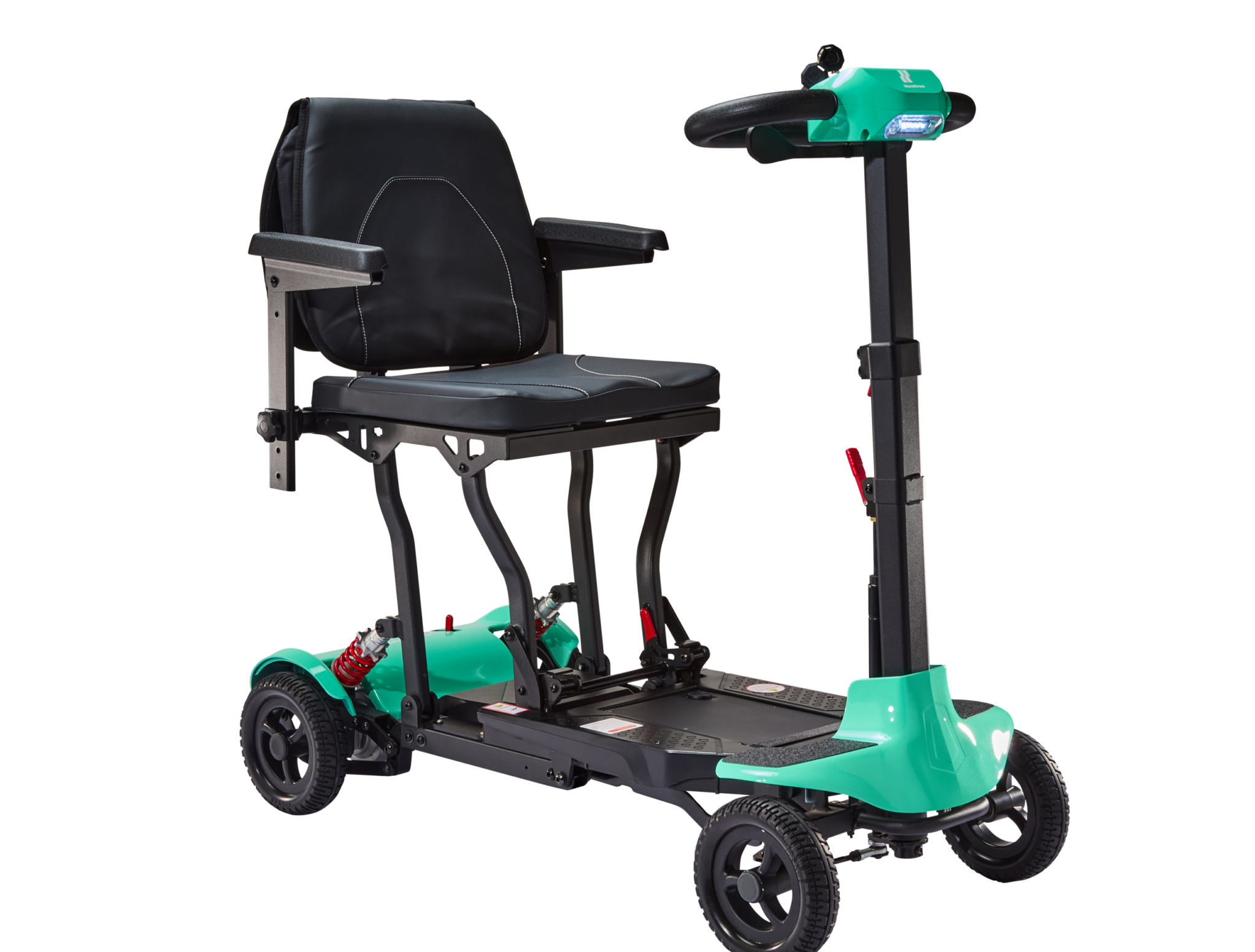
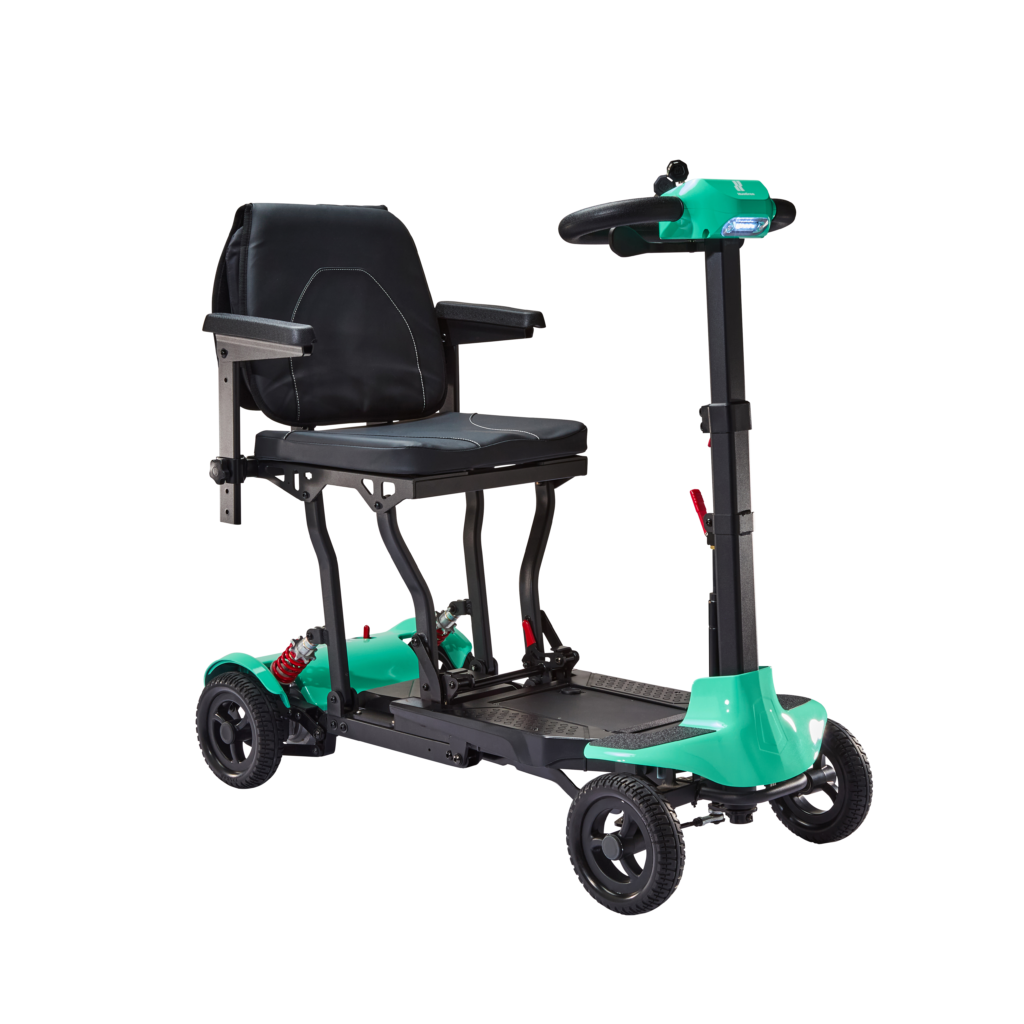
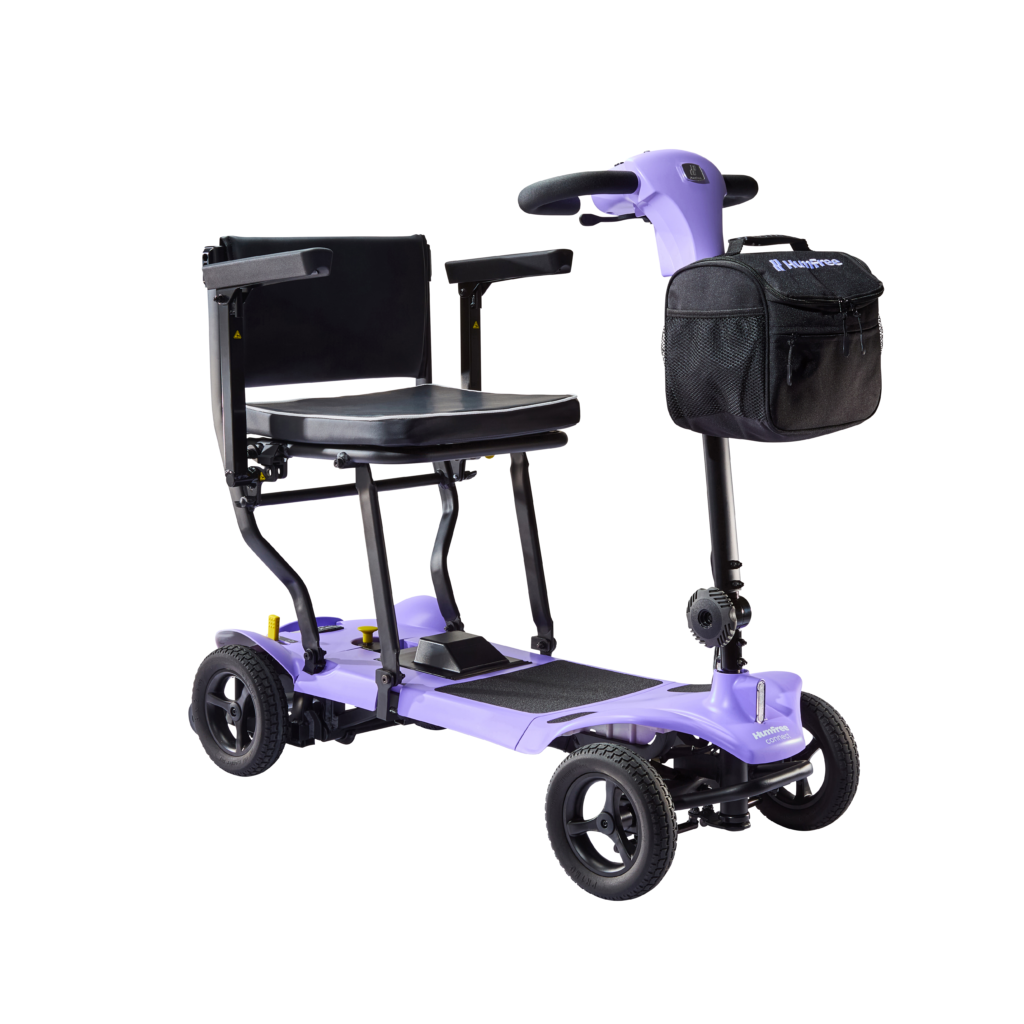
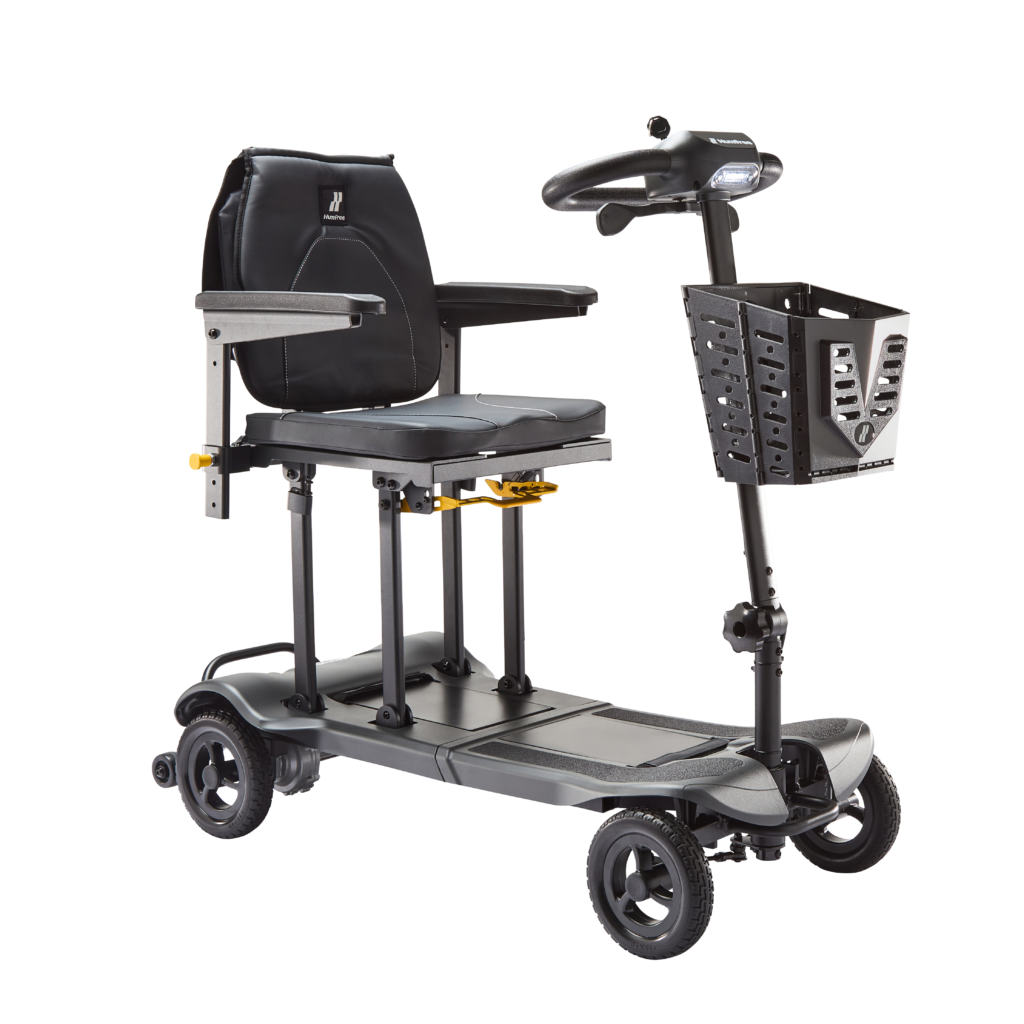
That said, not every scooter fits every situation equally well. A compact folding scooter is easier to transport than a large road model – a heavy Class 3 scooter may require ramps or hoists. A lightweight travel scooter might glide neatly into a car boot without fuss.
So yes, you can travel with a mobility scooter. The smoother question is: how easily?
That depends on the type of scooter you have and the kind of journey you’re planning.
Where can you take a mobility scooter?
Almost everywhere – with the right prep. Let’s break it down.
On pavements and in towns
This is the straightforward one. If you’re visiting another town or city, you can use your scooter just as you would at home.
Dropped kerbs, pedestrian areas and shopping streets are usually accessible. In busy areas, keeping your speed low and predictable helps everything feel calm rather than chaotic.
Before travelling somewhere new, it’s worth checking:
- Are the pavements wide?
- Are there steep hills?
- Is it cobbled or uneven?
Historic cities can be charming and slightly bone-rattling at the same time, so do bear that in mind.
In shops, cafés and attractions
Most shops and large attractions are used to mobility scooters. Accessibility has improved massively over the years.
Smaller independent cafés or older buildings may be tighter on space. It’s rarely about permission – more about physical layout.
A compact scooter is often easier in these environments. Larger road scooters can feel too chunky for narrow gift shops.
On buses
Most buses allow mobility scooters, but there are size and weight limits. In the UK, bus companies typically follow guidelines that specify maximum dimensions and turning circles. Not every scooter qualifies.
Your scooter will need to:
- Fit within 120cm x 70cm.
- Weigh no more than 300kg (42.2 stone) including you.
- Be a Class 2 model, with a top speed of 4mph (the pavement kind, not the road-going version).
- For the most comprehensive and up-to-date guidelines, visit gov.uk
Before travelling by bus in a new area:
Check the operator’s website, confirm your scooter meets their criteria, and look for information about designated spaces.
Some operators require you to apply for a permit in advance. It’s not universal, but it’s common enough to check before turning up at a stop and hoping for the best.
On trains
Trains are generally accommodating, but planning ahead makes everything smoother.
Most train operators provide:
- Assisted boarding
- Ramps
- Designated wheelchair spaces.
It’s usually advisable to book assistance in advance. That way staff are ready with ramps when you arrive. Platform gaps and older stations can present challenges – quick call ahead avoids surprises.
In terms of size and weight limits, it’s the same rules as for busses.
On ferries
Ferries are typically scooter-friendly. You’ll often remain seated on your scooter while boarding.
It’s still wise to notify the ferry company in advance, particularly for longer crossings or international travel.
On planes
Yes, you can take a mobility scooter on a plane. Airlines treat them as mobility equipment, not standard luggage. However, there are rules – especially regarding batteries.
Lithium batteries must meet specific requirements. You’ll need to inform the airline ahead of time, provide battery specifications and in most cases remove the battery for transport in the cabin.
We’ll cover air travel properly in the next section, because it deserves its own space.
Top tips for travelling with your mobility scooter
At this point, you might be thinking, ‘This sounds manageable… but slightly admin-heavy.’ Travelling with a mobility scooter isn’t complicated, but it does involve attention to detail and rewards preparation.
A bit of research before you go means you’re not negotiating accessibility while everyone else is ordering coffee.
Plan your route properly
You’ll need to look beyond destination names.
Look at:
- Pavement quality
- Steep inclines
- Distance between key places
- Public transport access
- Parking options.
Street View is your friend. So are local forums and accessibility reviews.
Historic towns can be beautiful and aggressively cobbled. Seaside promenades can be glorious and unexpectedly sloped. Rural villages can look quaint online and turn out to have no dropped kerbs whatsoever.
Five minutes of research can prevent an hour of frustration.
Top tip: If you’re travelling abroad, check local rules on scooter use. Regulations vary between countries, especially regarding road access and battery transport.
Research accessibility before you arrive
Don’t assume! Even well-known attractions vary hugely in layout.
Check:
- Step-free entrances
- Lift access
- Toilet facilities
- Surface types
- Whether you’ll need advance booking for assistance.
Large venues usually publish accessibility guides. Smaller places may require a quick phone call.
It can feel awkward asking detailed questions, but shouldn’t. You’re being organised – and venue staff tend to appreciate it.
Service your scooter before your trip
This is the equivalent of checking your car before a long drive. If you’re heading away for more than a quick day out:
- Check tyre condition
- Ensure brakes feel responsive
- Confirm lights are working
- Inspect battery health
- Listen for unusual sounds
If your scooter hasn’t been serviced in a while, consider booking one before a longer trip. A slightly wobbly wheel feels minor at home, but tends to feels bigger when you’re 20 miles away with a full day planned.
Know your scooter inside out
You don’t want to be learning how to fold it in a windy car park while someone politely waits.
Practise:
- Folding or dismantling it
- Adjusting speed settings
- Switching between modes
- Reversing smoothly
- Engaging freewheel mode.
If your scooter splits into parts, rehearse the sequence. Confidence in handling it reduces stress dramatically.
Check the rules before you travel
Especially for public transport. Bus operators often have specific size and weight limits. Train companies may require pre-booked assistance. Airlines will usually need advance notice.
Assuming access and discovering restrictions on the day is unnecessarily stressful. Every operator publishes policies online. Granted, they’re not always thrilling to read, but they are useful.
Charge it fully before setting off
Charge it fully the night before. If possible, take your charger with you, even for day trips.
Cold weather, hills and heavier loads drain batteries faster than expected. A full battery equals flexibility and confidence.
Avoid adding unnecessary weight
It’s tempting to hang bags from the handlebars, stack shopping underneath, and turn your scooter into a mobile storage unit. But extra weight affects:
- Range
- Handling
- Stability
- Hill performance.
Use the basket sensibly, distribute weight evenly and avoid heavy bags hanging from one side.
Pack essential documents and supplies
Things you’ll want to pop in your basket or travel bag include:
- Charger
- Any relevant permits
- Airline battery documentation (if flying)
- Insurance details
- Emergency contact information
- A bottle of water and snacks.
It’s unlikely you’ll need most of it. But if you do, you’ll be grateful you packed it.
Understand loading methods – car, bus, train
Before your trip, decide exactly how your scooter will move between places.
If travelling by car:
- Do you need a ramp?
- A hoist?
- Will you dismantle it?
- Can you lift the heaviest part comfortably?
- Have you practiced loading and unloading at home?
If using buses or trains:
- Know where the designated space is.
- Understand how the ramp is deployed.
- Position yourself confidently when boarding.
- Call ahead so porters can help.
Know local regulations
Especially if travelling abroad.Speed limits for scooters vary. Some countries restrict road use. Others have specific pavement rules.
A quick search of local mobility regulations prevents confusion. It also gives you confidence if anyone questions your presence.
Know your rights
Mobility scooters are mobility aids. That means you are entitled to reasonable adjustments under equality legislation in the UK.
- You can request assistance.
- You can ask for ramps.
- You can expect accessible transport where advertised.
Remember, you’re asking for access, not special treatment – and everyone deserves that.
Prepare for weather changes
British weather loves unpredictability.
Pack:
- A waterproof cover
- A lightweight rain jacket
- Layers you can adjust
- A hat for sun or drizzle
Bear in mind that rain affects visibility and surfaces, and wind can make open spaces feel colder than expected.
Wear comfortable clothing
Comfort directly affects how long you enjoy being out. When you’re comfortable, you’re patient. When you’re uncomfortable, everything feels more difficult. If you’re seated for long periods:
- Choose breathable fabrics
- Avoid restrictive waistbands
- Wear supportive shoes
- Consider extra cushioning if needed
Tips for air travel with mobility scooters
Flying introduces check-in desks, security, battery rules and the fear of watching your scooter disappear along a conveyor belt. Take a breath. It’s doable – you just need to prepare.
1. Tell the airline early
The moment you book your flight, inform the airline that you’re travelling with a mobility scooter. Do not leave this until online check-in the night before.
They’ll ask for:
- The make and model.
- Dimensions.
- Weight.
- Battery type.
- Battery watt-hour rating (if lithium).
Have this information written down somewhere accessible. You’ll likely be asked more than once.
2. Arrive earlier than you would normally
Airports involve:
- Special assistance desks.
- Tagging mobility equipment.
- Security screening.
- Possibly separate handling procedures.
Rushing through an airport is stressful at the best of times. Doing it while coordinating scooter logistics is unnecessarily dramatic. Give yourself breathing space.
3. Use airport assistance
There’s no need to struggle alone. Book special assistance in advance.
This can include:
- Help through security
- Priority boarding
- Support getting to the gate
- Assistance during transfers
Even if you’re confident independently, airports are large and distances add up quickly.
Using assistance doesn’t take away independence. It protects your energy for the actual trip.
4. Know what happens at the gate
In many cases, you’ll be able to use your scooter right up to the aircraft door. At that point, ground staff will take it for loading into the hold.
Before handing it over:
- Switch it off.
- Remove the key.
- Set it to freewheel mode if required.
- Fold or secure it according to airline instructions.
- Take photos of your scooter from multiple angles. It’s rare, but damage can happen. Having images gives you protection.
5. Protect vulnerable parts
The aim is to make it as secure and compact as possible. If possible:
- Remove loose baskets.
- Secure detachable cushions.
- Carry the battery separately if instructed.
- Some people wrap delicate areas with light padding. Check with the airline what’s allowed.
6. On arrival
Most airlines return mobility scooters either at the aircraft door or at oversized baggage reclaim.
Ask before landing so you know where to wait.
If there’s any damage, report it immediately before leaving the airport, and document everything on the spot.
Air travel sounds complicated because there are more steps. In reality, once you’ve done it once, it becomes a system.
FAQs about travelling with a mobility scooter
Let’s address some of the most common questions.