Batteries for mobility scooters are like any other battery: when it’s working well, you don’t think about it. When it starts fading, you definitely do.
It’s easy to take the ‘out of sight, out of mind’ approach, but with a little TLC, your batteries can perform better and last longer – so it’s definitely worth your time. Here’s everything you need to know about those two little powerhouses hidden beneath the shell.
How long do mobility scooter batteries last?
Short answer? It depends. Longer answer? Usually between one and five years… sometimes longer… occasionally shorter… and very much influenced by how you treat them.
It’s a wide range, which is why the question can yield frustrating answers. But the truth is, battery life isn’t a fixed expiry date stamped on the side – it’s more like a drawn-out fade, with lots of variables that determine the finish line.
Types of mobility scooter batteries
There are two main types you’ll come across.
Sealed lead-acid (SLA) batteries
These stalwarts of the battery world have been around for years. They’re reliable, relatively affordable and widely used.
The downsides are, they’re heavier, bulkier and a little more sensitive to being left uncharged for long periods. They also don’t love being run flat repeatedly. Do it too often and you shorten their life.
Lithium-ion batteries
These are newer in the mobility space. They’re lighter, charge faster and tend to last longer – which means they also cost a little more. You’ll often find them in compact folding scooters and travel-friendly models.
They also cope better with partial charging, and tend to hold their charge better when not in use. If your scooter sometimes sits for a few weeks, lithium handles it better.
Lead-acid batteries vs. Lithium-ion batteries: which lasts longer?
The battery type has a huge impact on how long you can expect yours to last.
If you’re using a traditional sealed lead-acid battery, expect 1-3 years of good regular use. If you’re using a modern lithium-ion battery, you’re often looking at 2-5 years, sometimes more.
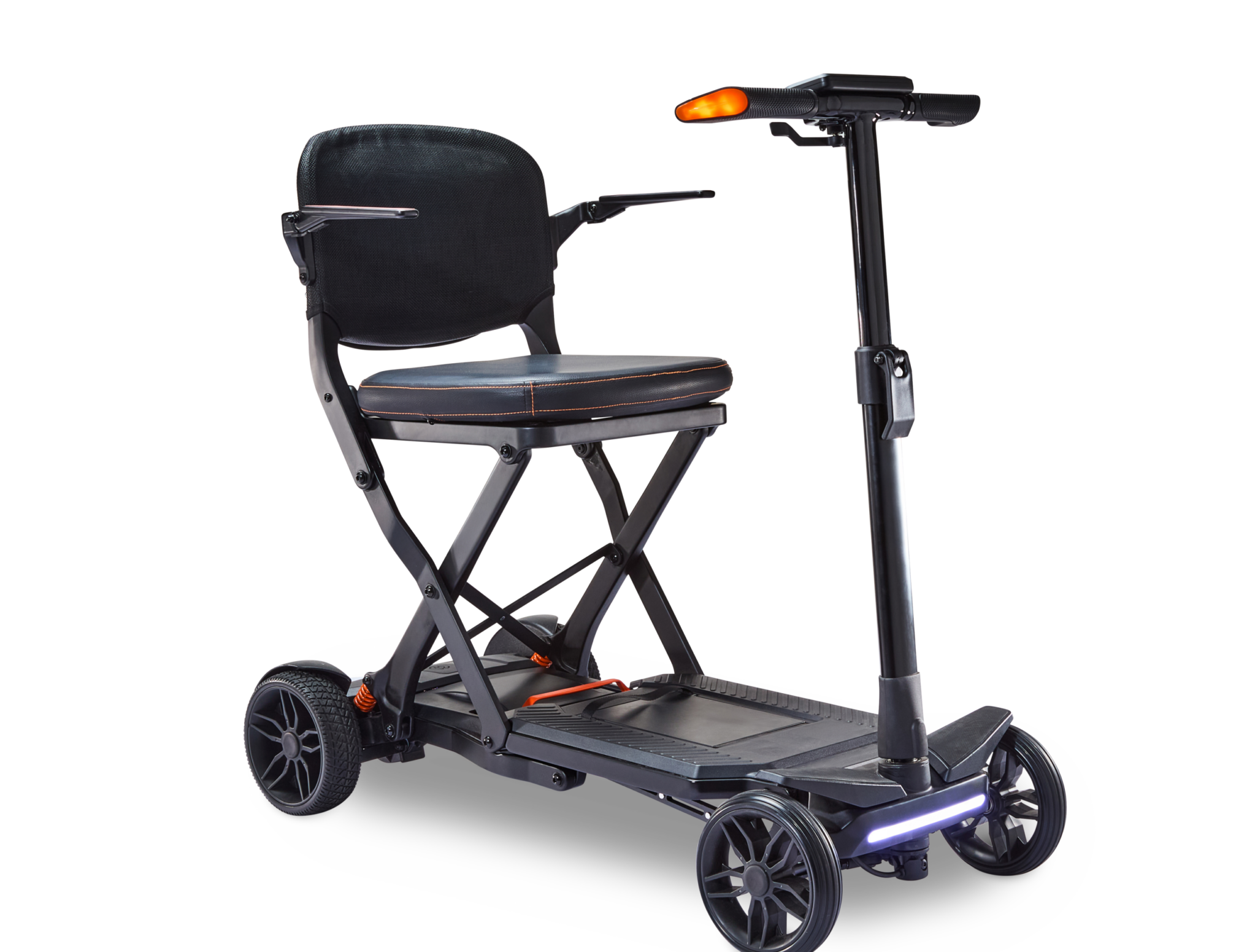
If you’ve seen modern lightweight scooters (like our own), they typically use lithium batteries for exactly that reason – reduced weight and longer lifespan make daily use much easier.
Things that affect mobility scooter battery lifespan
This is where things get interesting. Two people can buy the exact same scooter on the same day and see completely different battery lifespans.
Why? Because usage matters. A lot.
If you regularly drive up steep hills, travel long distances, brake harshly and overload your scooter with heavy shopping, your battery is up against it. Harder work means quicker wear.
If your journeys are short and on flat ground, the battery has an easier life.
Temperature also plays a role. Extremely cold weather can temporarily reduce range – while storing a scooter in a freezing garage for months on end without charging can permanently harm your battery (especially lead-acid).
Charging habits matter too. Running your lead-acid battery completely flat before recharging will shorten its life.
None of this is going to wipe out your battering in one go. But over time, these small factors stack up. Or in other words – there isn’t one single villain. It’s more like a collection of habits (which, good news – most of which you can control).
In a nutshell, your battery’s lifespan is affected by:
- How often you use the scooter.
- How far you travel per trip.
- The terrain you cover.
- The weight it carries.
- How consistently you charge it.
- Where and how it’s stored.
When should you replace your scooter battery?
It’s unlikely you’ll wake up one morning to find your scooter non-responsive. It’s more like trying to fill a leaky bucket – over time, the battery simply can’t hold as much charge as it once did.
So how do you actually know it’s time?
- The range starts shrinking.
- You need to charge more often.
- The scooter feels a little less eager on hills.
- The battery drops sharply, even after a full charge.
If your scooter no longer comfortably covers your usual journey – whether that’s the weekly shop or a trip to the park – that’s your cue to start thinking about replacement. The battery might still function, but if it’s affecting your confidence, it’s not really doing its job anymore.
Top tip – if you’re using dual lead-acid batteries, replace them as a pair. Swapping one old and one new battery rarely ends well. They need to age together.
What are battery cycles, and why do they matter?
The lifespan of your battery isn’t just about time. It’s about cycles. A charge cycle is essentially one full discharge and recharge. Even if you don’t run it completely flat, partial discharges still count towards overall wear.
Most sealed lead-acid batteries manage a few hundred cycles before performance noticeably drops. Lithium-ion batteries handle significantly more. That’s one of the reasons newer lightweight scooters often lean towards lithium – they’re lighter,they more efficient and longer lasting.
Top tips for keeping your scooter battery healthy
If you treat your battery kindly, you should get years of reliable, uninterrupted use out of it. Here are our top tips (and remember, the battery guide in your welcome pack contains even more information).
- Charge regularly. A full battery is a happy battery.
- Don’t leave it uncharged for long stretches.
- Store it somewhere dry and not freezing. Extreme cold isn’t a friend to batteries.
- Use the correct charger. Compatibility affects battery life.
- Try not to overload the scooter beyond its recommended weight capacity.
- And finally, drive smoothly. Harsh braking is a strain on your engine, brakes and battery.
How much do replacement mobility scooter batteries cost?
Scooter batteries range from £50 to £450, which is admittedly a huge range.
Essentially, it depends on the type and capacity. A trusted brand with a longer range usually means a higher price point. Cheaper, unbranded batteries can sometimes underperform, even if the specs look similar on paper – so avoid skimping on cost if you can.
- Sealed Lead-Acid (SLA) batteries cost around £30-100.
- Gel batteries cost around £50-150.
- Lithium-ion batteries generally cost £100-600.
Note: many scooters use two 12-V batteries, and should be bought and replaced together.
How to choose the right replacement scooter battery
Voltage. Amp hours. Compatibility charts. It can feel as technical as buying car parts. Here’s how to navigate the world of scooter batteries.
Check your manual
Start simple. Check your scooter manual. It will specify the exact voltage and capacity required. Most small to mid-sized scooters use 12V batteries in pairs, or a single lithium battery designed specifically for that model.
Match the voltage exactly
This one’s non-negotiable. Capacity, measured in amp hours (Ah), influences range. A higher capacity battery can increase how far you travel per charge – but only if your scooter is designed to accommodate it. Physical size and connection type matter too.
Ask for help
When in doubt, double-check before buying. Your retailer or brand manufacturer should be able to answer any questions. And if you’re a Humfree customer, our friendly Bristol-based team are always happy to chat.
FAQs about mobility scooter batteries
Let’s address some of the most common questions.