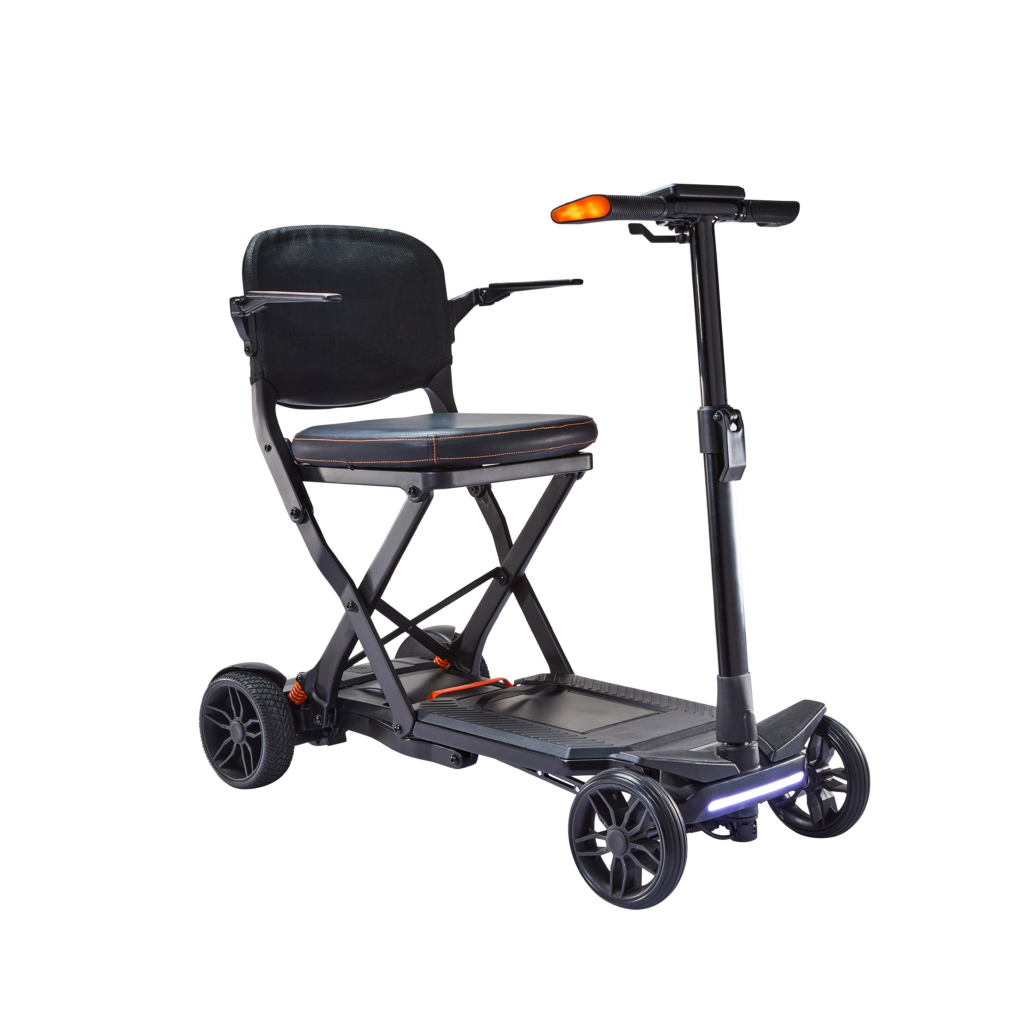
If you’ve ever taken a lightweight pavement scooter onto a cracked country path and immediately thought, ‘Oh. This was optimistic,’ you’re not alone.
Outdoor use means different things to different people. For some, it’s a gentle roll to the local shops. For others, it’s park trails, gravel car parks, coastal promenades, uneven pavements, the odd unexpected pothole and that one hill near home that feels steeper every year.
So when someone asks, ‘What’s the best mobility scooter for outdoor use?’ the honest answer is: it depends what you mean by outdoors.
In this article, we’ll get more specific about features to look for, common mistakes people make when choosing an outdoor scooter, and how to avoid buying something that looks powerful but doesn’t actually suit your life. Let’s dive in!
What is an outdoor scooter?
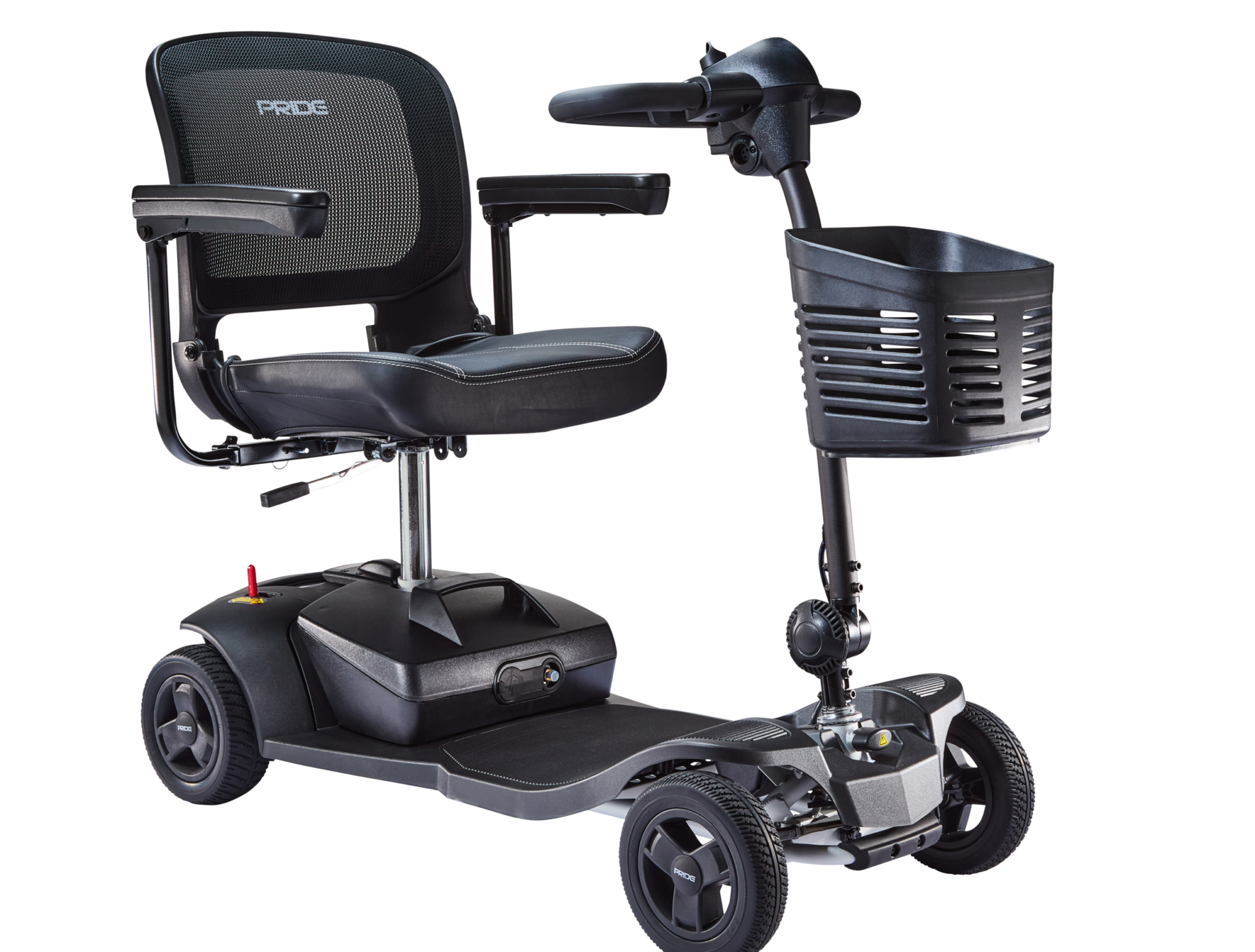
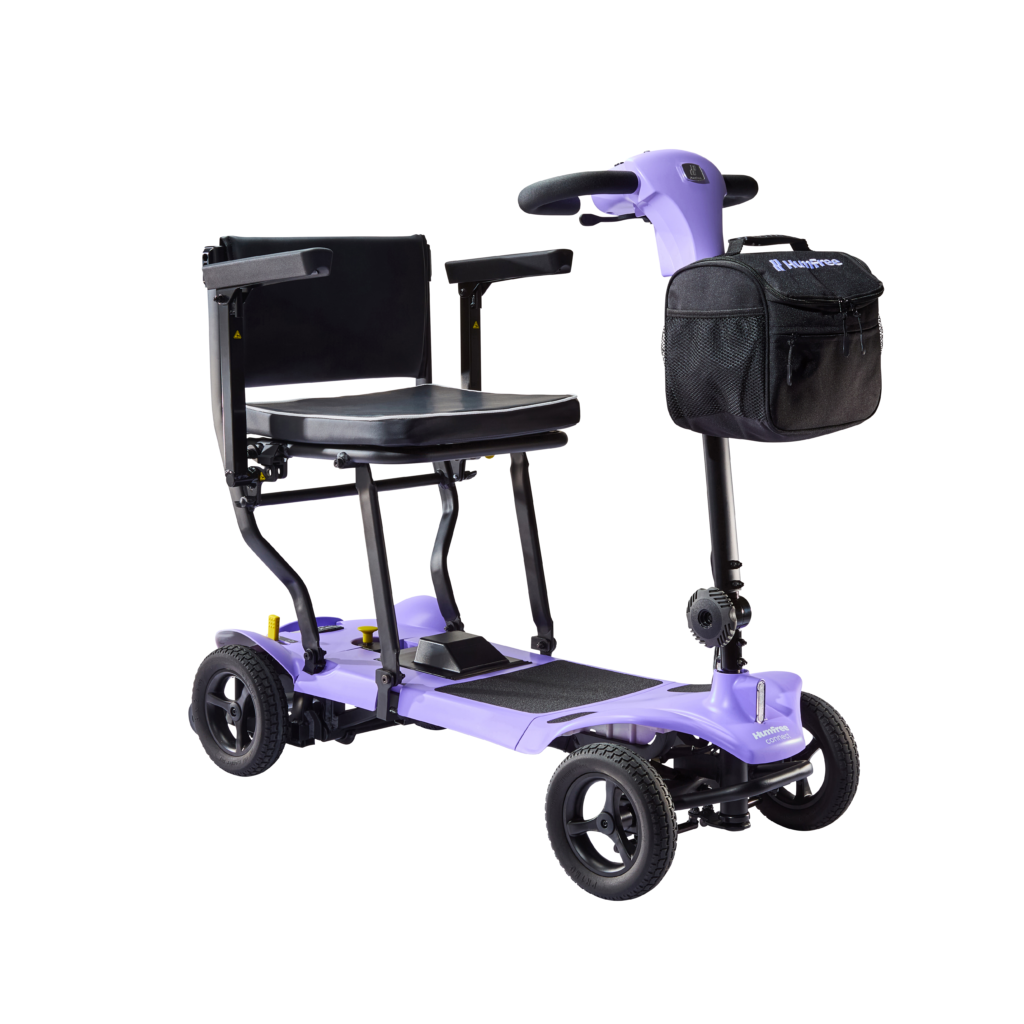
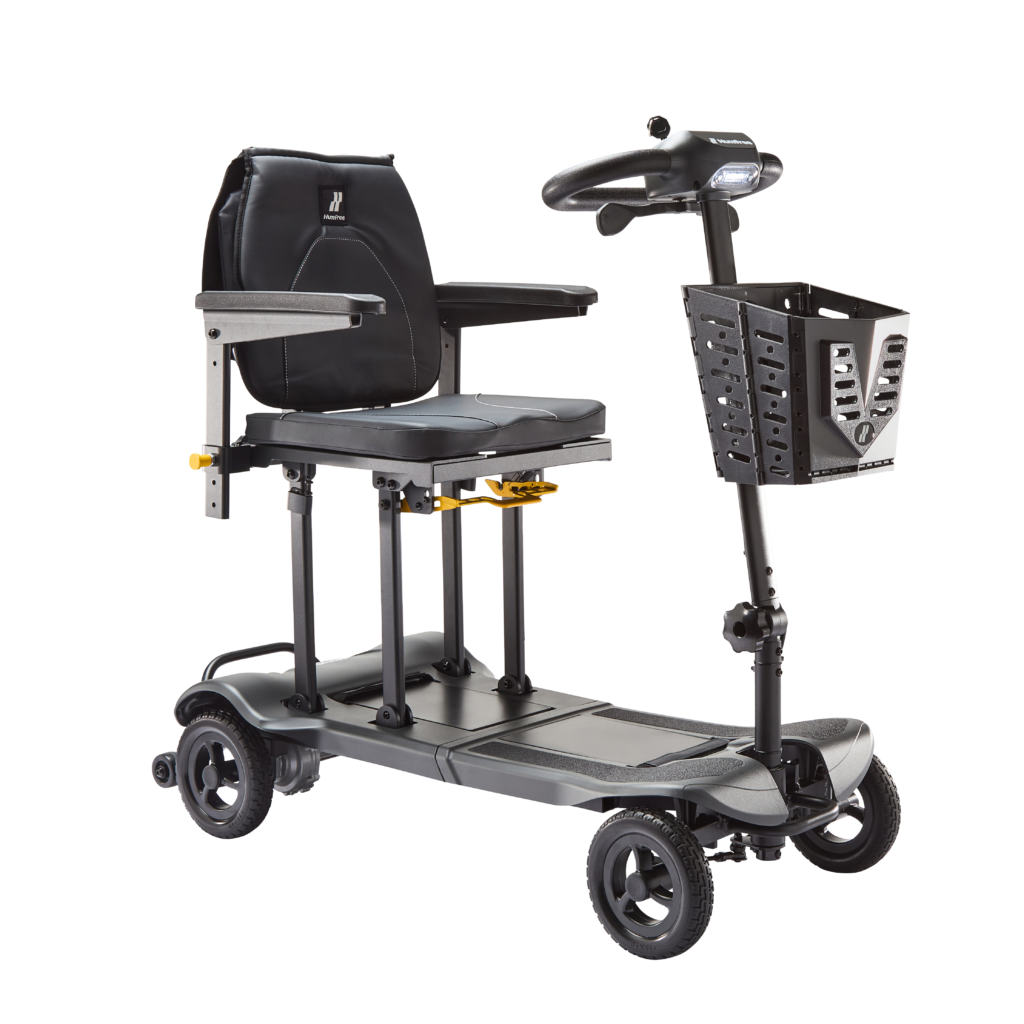
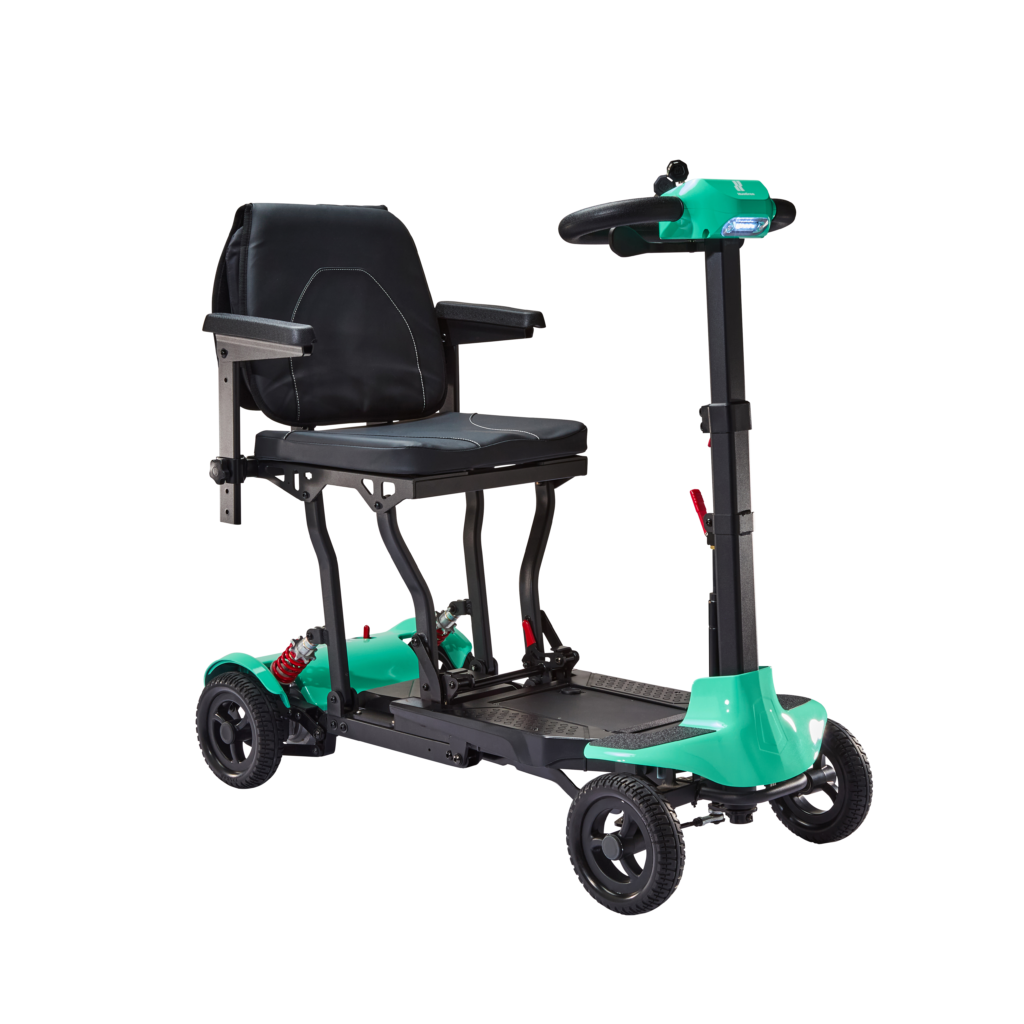
As the name implies, it’s any scooter designed to be used outdoors. Which is pretty much all of them! Whether it’s a clever folder, like the Lite, or an easier lifter, like the Connect, they were built for nipping to the shop and back. Some, even further.
What is a road scooter?
A road scooter is a class 3 vehicle, and is designed to cope with more than smooth shopping centre floors and neatly paved high streets. It’s built for fresh air, longer distances and surfaces that aren’t perfectly behaved.
That usually means:
- Larger wheels.
- Stronger suspension.
- A more powerful motor.
- A sturdier frame.
- Higher ground clearance.
Road scooters tend to be more stable at higher speeds, more confident over uneven ground and more comfortable if you’re out for more than half an hour. They’re designed to handle things like:
- Gravel paths
- Rural pavements, lanes and roads
- Park trails
- Slopes and inclines
- Cracked or older paving
- Longer trips
You can absolutely use some smaller scooters outdoors. Plenty of people do. But there’s a difference between ‘can manage it’ and ‘feels comfortable doing it’.
If your outings regularly involve rougher surfaces, you’ll want something that feels sturdy and reassuring rather than slightly rattly and apologetic.
Class 2 vs Class 3 scooters – what’s the difference?
In the UK, mobility scooters fall into two main classes: Class 2 and Class 3.
Class 2 scooters are typically smaller, lighter and designed primarily for pavements. They have a maximum speed of 4mph. You’ll often see these described as pavement scooters or travel scooters.
They’re brilliant for:
- Shopping trips
- Short local journeys
- Parks with smooth paths
- Town centres
- Transporting in a car, plane, train or bus.
They’re compact, easy to manoeuvre, and often foldable or dismantlable. If your outdoor use means ‘fresh air but mostly flat’, they can be ideal.
But once you introduce steeper hills, rough ground or longer distances, you may start to feel their limits.
Class 3 scooters are road-legal models. They can travel up to 8mph on the road and 4mph on pavements. They’re larger, heavier and generally more robust.
Legally, they need to come with lights, indicators, a horn, rear-view mirrors – be registered with the DVLA.
More importantly for outdoor use, Class 3 scooters tend to offer:
- Bigger batteries
- Greater range
- Larger wheels
- Improved suspension
- More generous seating
If your idea of outdoors includes longer journeys, rural roads without pavements or covering several miles at a time, a Class 3 scooter often feels more capable.
What to consider before buying an outdoor mobility scooter
‘Best’ is subjective and depends entirely on what your actual life looks like – not what a brochure says. Let’s break it down properly.
1. Terrain – where are you really going?
Be honest with yourself. Are you mainly on smooth pavements with the occasional slope? Or are you dealing with:
- Gravel driveways
- Country lanes
- Grass verges
- Uneven park paths
- Steep hills
- Coastal paths with cracks and dips
If most of your routes are predictable and paved, a robust Class 2 scooter may be enough.
If you regularly face hills or rougher surfaces, look for a road model with good suspension, a higher ground clearance and a motor designed for hills.
2. Range – how far do you actually travel?
Battery range can look impressive on paper. Fifteen miles. Twenty miles. Even more.
But ask yourself: how far do you usually go in one outing?
If you’re popping to the local shop and back, you don’t need a touring-level battery.
If you enjoy long days out, visiting garden centres that feel the size of small towns, or exploring seaside promenades end to end, range matters more – and you should consider a Class 3 design.
3. Comfort – one hour versus six
If you’re outdoors and sitting on your scooter for extended periods, comfort becomes everything.
Look at:
- Seat padding
- Back support
- Armrest adjustability
- Suspension quality
- Leg room
A larger outdoor scooter often provides a more generous seat and a smoother ride. Over longer distances, that difference is noticeable.
A compact travel scooter might feel perfectly fine for 20 minutes. After two hours on uneven paths, you may feel differently.
4. Stability – how planted does it feel?
Outdoor surfaces are unpredictable. Wind can pick up. Roads camber. Pavements slope.
A heavier scooter with a wider wheelbase often feels more stable. That added weight can be reassuring outdoors, even if it makes the scooter less convenient to transport.
If you feel slightly wobbly or tense on uneven ground, it’s a sign you need something more grounded.
5. Transport and storage
Here’s the trade-off. The more capable a scooter is outdoors, the larger and heavier it tends to be.
So ask:
- Does it need to fit in your car?
- Will you be lifting it yourself?
- Do you have garage storage?
- Will it live in a hallway?
If you travel frequently by car, a huge road scooter might become inconvenient. In that case, you may need to balance outdoor strength with portability.
Some people accept slightly less rugged performance in exchange for easier transport. Others prioritise outdoor confidence above all else. What works for your routine is all that matters.
6. Weather resilience
Outdoor scooters should cope with British weather. That includes drizzle, wind and the occasional enthusiastic downpour.
Look for:
- Solid build quality
- Reliable brakes
- Tyres with decent grip
- Good lighting if you’re out in low visibility
No scooter loves being left in constant heavy rain, but a proper outdoor model should feel dependable in everyday conditions.
7. Your local environment
This is the bit most buying guides skip. Stand outside your home and look around. Are there dropped kerbs nearby? Are pavements wide? Is there a steep hill on your route? Do you have rough road edges?
The ‘best’ scooter for someone in a flat town with smooth pavements is completely different from the best scooter for someone in a hilly village with patchy surfaces.
Picture your average week. The route to the shop. The route to the park. The route to your friend’s house. That’s your real testing ground.
The best mobility scooters for outdoor use aren’t necessarily the biggest, fastest or most expensive. They’re the ones that make your regular outdoor journeys feel calm instead of cautious. Stable instead of tense. Comfortable instead of rattly.
The features that really make a difference outdoors
When you’re browsing scooters online, it’s easy to get distracted by maximum speed and shiny design. Outdoors, the boring-sounding features are often the ones that transform the experience.
Suspension – your spine will thank you
If you plan to use your scooter beyond perfectly smooth pavements, suspension is a must.
Good suspension absorbs shock from:
- Cracked paving.
- Gravel.
- Uneven slabs.
- Dropped kerbs.
- Slightly chaotic British road repairs.
Without it, every bump transfers straight through the frame and into you. Over ten minutes, that’s annoying. Over two hours, you feel like loose change rattling in someone’s pocket.
Larger Class 3 scooters usually have more advanced suspension systems. Some higher-spec Class 2 models offer it too, but not all. If outdoor comfort matters, check this carefully.
Tyres – air-filled vs solid
Pneumatic (air-filled) tyres provide better cushioning and grip on uneven terrain. They’re generally more forgiving on rough ground.
Solid tyres require less maintenance and can’t puncture, which is appealing. But they can feel firmer over uneven surfaces.
If you’re regularly on gravel or country paths, pneumatic tyres often feel noticeably smoother.
If most of your outdoor use is pavements and town centres, solids may be perfectly fine – and as an added bonus, they don’t puncture. Not to sound like a broken record, but – it’s about where you actually go.
Ground clearance – will it scrape?
Ground clearance refers to how high the scooter sits off the ground.
Low clearance scooters can struggle with:
- Raised pavement edges
- Speed bumps
- Uneven ground
- Grass
You don’t want to feel like you’re gently shaving the underside of your scooter every time you cross a bumpy patch. Outdoor-focused scooters usually sit slightly higher, which makes navigating imperfect surfaces far less stressful.
Motor power – especially for hills
If you live somewhere flat, this may not be a huge concern. If you live anywhere with slopes, pay attention.
Some scooters manage gentle inclines well but slow dramatically on steeper hills. Others handle them confidently.
Manufacturers usually list maximum incline capability, but real-world performance matters more than numbers.
If you regularly tackle hills, you want:
- A motor designed for climbing.
- A battery that won’t drain rapidly under strain.
- A scooter that feels grounded so you don’t feel like you’ll tip.
Seating – don’t underestimate this
Outdoor journeys tend to be longer. That means seating comfort becomes a serious consideration.
Look at:
- Seat width.
- Padding thickness.
- Adjustability.
- Armrest positioning.
- Back support height.
A more generous seat makes longer trips feel relaxed rather than endurance-based.
Compact travel scooters often prioritise portability over plush seating. That’s fine for short outings punctuated by coffee breaks. Less ideal for a full afternoon exploring where the scooter is your primary seat.
Common mistakes people make when choosing an outdoor scooter
Let’s save you from a few classics.
Buying for ‘just in case instead of real life
Some people buy the biggest, most powerful scooter available because they imagine epic countryside adventures. But if 90% of your journeys are to the local shops and back, a massive road scooter might feel unnecessarily bulky.
Choose for your routine, not your fantasy itinerary.
Going too small for pride or convenience
The opposite happens too. People choose a compact scooter because it feels less imposing or easier to store – then find it struggles with their environment.
If you regularly face hills or rough surfaces, downsizing too much can backfire.
Ignoring transport realities
A powerful outdoor scooter is brilliant… until you try to fit it in a small hatchback without a ramp.
Think about:
- Boot size.
- Lifting ability.
- Whether you travel alone.
- Storage at home.
There’s no point owning the perfect outdoor machine if you can’t realistically move or store it.
Underestimating how much comfort matters
In a showroom, almost any scooter feels fine for five minutes. Outdoors, over distance, small differences in cushioning, suspension and posture support become big ones. If possible, imagine sitting in it for a full hour. Does it still feel good?
Our home demos are relaxed events, giving you plenty of time to sit on your chosen scooter and drive it around, so you’ll know for sure how comfy it’ll be.
Mistaking outdoor use for off-road racing
Sorry to burst this bubble, but even the most robust mobility scooters aren’t quad bikes.
This means no:
- Deep mud.
- Rocky trails.
- Fields after heavy rain.
- Aggressive off-roading.
‘Outdoor’ usually means confidently handling real-world pavements, park paths, slopes and roads – not tackling a mountain bike course. Sorry to be such spoilsports.
So… what is the best mobility scooter for outdoor use?
If your outdoor life is mostly paved, moderately smooth and under a few miles at a time, a strong Class 2 scooter with decent suspension can be ideal. Lighter. Easier. Less overkill.
If you live in a rural area, deal with hills, travel longer distances or regularly use roads without pavements, a Class 3 scooter often feels more capable and reassuring.
The ‘best’ one is the scooter that:
- Handles your hills without drama.
- Feels stable on your local surfaces.
- Has enough range for your typical day.
- Doesn’t make storage a nightmare.
- Keeps you comfortable for as long as you’re out.
It should expand your world, not complicate it. Because the real goal isn’t owning the most powerful scooter on paper.It’s being able to head outside without second-guessing whether today’s route will feel like a battle.
And when you find the right outdoor scooter, that’s exactly what it becomes – simple, steady independence on your terms.
FAQs about outdoor mobility scooters
Let’s address some of the most common questions.